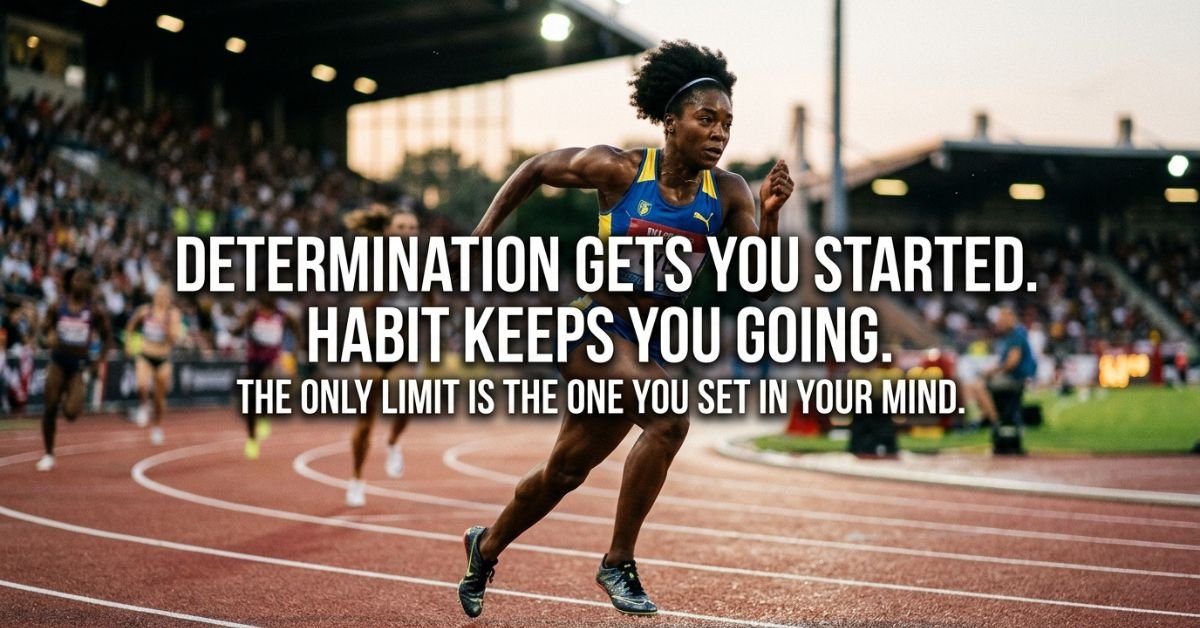
Motivational Sports Quotes: The Words That Build Champions
Sport has always been more than a contest of bodies. It is a theater of will, where discipline, heartbreak, and hope collide every single day. This article gathers a fresh collection of original motivational lines built around the themes that define competitive greatness: discipline, mental toughness, failure, teamwork, preparation, rivalry, leadership, and legacy. Below is a roadmap of what’s covered before we dive into each theme.
Table of Contents
| # | Chapter | Focus |
|---|---|---|
| 1 | Foundations of Champions | Hard work, passion, and discipline |
| 2 | Mental Toughness | Confidence, focus, and resilience |
| 3 | Failure and Adversity | Losing, comebacks, and perseverance |
| 4 | Teamwork and Leadership | Unity, trust, and sacrifice |
| 5 | Winning and Excellence | The pursuit of greatness |
| 6 | Preparation and Practice | The unseen hours before the spotlight |
| 7 | Competition and Rivalry | What pushes athletes further |
| 8 | Sport-Specific Wisdom | Lessons drawn from different games |
| 9 | Coaches’ Corner | Philosophies from the sidelines |
| 10 | Sportsmanship and Character | Integrity in victory and defeat |
| 11 | Beyond the Game | Life lessons drawn from sport |
| 12 | Legacy and Greatness | What it means to leave a mark |
Foundations of Champions: Hard Work, Passion, and Discipline
Long before an athlete ever stands on a podium, they’ve already put in thousands of hours nobody saw. The foundation of every great career is built quietly, often in empty gyms and cold mornings, driven by a love for the craft that has nothing to do with applause.
- Talent opens the door, but only sweat keeps it from closing again.
- The grind you complain about today is the strength you’ll thank yourself for tomorrow.
- Nobody claps for the sunrise workouts, but they’re the ones that build the athlete everyone cheers for later.
- Discipline is a promise you keep to yourself when no one is watching to check.
- Passion without effort is just a wish wearing a jersey.
- Every champion was once someone who refused to stop on an ordinary day.
- The body follows where the mind has already decided to go.
- Hard work is the quiet language every great athlete eventually learns to speak fluently.
- You don’t rise to the level of your dreams, you fall to the level of your daily habits.
- Love the process before you ever fall in love with the outcome.
- Greatness is built one unremarkable, unglamorous repetition at a time.
- The athlete who trains in silence is usually the one who wins out loud.
Mental Toughness: Confidence, Focus, and Resilience
Physical gifts open doors, but the mind decides how far an athlete walks through them. Confidence under pressure, focus amid chaos, and the ability to reset after a mistake separate the merely talented from the truly great.
- Pressure only breaks the athlete who never practiced carrying it.
- Confidence is not the absence of doubt, it’s moving forward anyway.
- The strongest muscle in sport is the one between your ears.
- Focus is choosing what deserves your attention and starving everything else.
- A calm mind performs what a nervous mind only imagines.
- Resilience is getting knocked down nine times and standing up a tenth, without keeping score.
- The scoreboard doesn’t measure heart, but heart is what changes the scoreboard.
- Champions don’t fear the moment, they’ve already lived it a thousand times in their head.
- Your mind will quit a thousand times before your body ever does, don’t listen to the first nine hundred.
- Composure under pressure is simply preparation wearing a different name.
- The loudest crowd can’t out-shout a focused mind.
- Mental toughness is choosing the harder right over the easier wrong, especially when you’re exhausted.
Failure and Adversity: Losing, Comebacks, and Perseverance
Every career, no matter how decorated, contains far more losses than the record books remember. What separates legends from the merely gifted is how they respond to the losses, the injuries, and the seasons that seem to fall apart.

- A loss is only wasted if you refuse to learn what it came to teach you.
- Every comeback story begins in a moment nobody wanted to be in.
- The scar from an old injury is proof you know how to return, not just how to fall.
- Adversity doesn’t build character, it reveals the character you were quietly building all along.
- Falling down is part of the sport, staying down is the only real failure.
- The athletes we remember longest are rarely the ones who never lost.
- Setbacks are simply setups for a stronger comeback, if you choose to see them that way.
- Every defeat carries a lesson wrapped inside disappointment, unwrap it before you walk away.
- The season that breaks you is often the same one that eventually remakes you.
- Getting back up is a skill, and like every skill, it gets stronger with practice.
- Doubt is loud right after a loss, but it’s never louder than the will to try again.
- Perseverance is choosing to show up the day after the worst day.
Teamwork and Leadership: Unity, Trust, and Sacrifice
Individual brilliance wins highlight reels, but championships are almost always won by groups of people who trust each other enough to sacrifice personal glory for a shared goal.
- A team wins when everyone is willing to be a role player for one shared purpose.
- Trust is the quiet foundation underneath every great locker room.
- Talent fills a roster, but chemistry is what fills a trophy case.
- Leadership is carrying the team’s weight without ever announcing that you’re carrying it.
- The best captains lead by example long before they lead by words.
- Unity turns a group of individuals into a single, harder-to-beat opponent.
- Sacrifice is passing the ball when the crowd expects you to shoot.
- A true leader makes everyone around them believe they’re capable of more.
- The strongest teams are built on trust that was earned in practices no one was watching.
- Great teammates make each other’s weaknesses irrelevant.
- Leadership means being the calmest person in the room during the loudest moment.
- A team’s culture is built by what its best players are willing to tolerate, or refuse to.
Winning and Excellence: The Pursuit of Greatness
There’s a difference between wanting to win and being obsessed with the standard that produces winning. Excellence is never about a single trophy — it’s a daily commitment to being slightly better than the day before.
- Excellence is a habit disguised as a single great performance.
- Winning is the byproduct of a thousand decisions nobody sees on game day.
- Greatness doesn’t arrive, it accumulates, one disciplined choice after another.
- The pursuit of excellence has no finish line, only new starting points.
- Good enough is the quiet enemy of everything great.
- Champions chase a standard, not a scoreboard.
- Excellence is what happens when preparation refuses to leave anything to chance.
- The extra rep, the extra mile, the extra minute, that’s where greatness actually lives.
- A true competitor is never satisfied, only temporarily proud.
- Winning is rented, but the habits that produce it are yours to keep.
- Being the best is not a destination, it’s a discipline you renew every single day.
- Excellence is choosing the harder path when the easier one is right there.
Preparation and Practice: The Unseen Hours Before the Spotlight
Games are won long before the opening whistle. This chapter honors the quiet, repetitive work of practice, film study, and rehearsal that never makes a highlight reel but decides who is ready when the moment finally arrives.
- Preparation is the only part of competition you fully control, so control it completely.
- The game rewards the athlete who rehearsed the moment a hundred times before it ever arrived.
- Practice doesn’t make perfect, it makes the pressure feel familiar.
- The work you do when no one’s watching decides what happens when everyone is.
- Confidence on game day is just preparation showing up on time.
- Every rep in the gym is a quiet deposit into a bank you’ll need on game day.
- The athlete who out-prepares you has already won half the contest.
- Film study is where invisible advantages are built one frame at a time.
- Routine is not boring, it’s the architecture that holds a great performance up.
- What you rehearse in silence eventually performs itself under pressure.
- The difference between ready and hoping is called preparation.
- Small, consistent practice beats occasional brilliance every single time.
Competition and Rivalry: What Pushes Athletes Further
Rivalries elevate careers. A worthy opponent forces an athlete to dig for a level of performance that comfort alone would never produce.
- A great rival is a mirror that shows you exactly how much further you can go.
- Competition doesn’t create pressure, it reveals how ready you already were.
- Iron sharpens iron, and a worthy opponent sharpens ambition.
- The athlete who respects their rival trains twice as hard as the one who dismisses them.
- Every rivalry is really a shared agreement to keep getting better together.
- Your toughest opponent is often the reason you found a level you didn’t know you had.
- Competing against greatness is the fastest way to discover your own.
- Rivalries end careers of comfort and start careers of urgency.
- The real prize in any rivalry is who you become while chasing it.
- Beating a lesser opponent teaches little, beating your equal teaches everything.
- A rival never stops working, so neither can you.
- Respect your competition enough to never underestimate what they’re building behind closed doors.
Sport-Specific Wisdom
Every discipline develops its own philosophy, shaped by the unique demands of the game. Here is a cross-section of original reflections inspired by basketball, football, boxing, tennis, and track.
- Basketball rewards the team that moves the ball and trusts each other more than it rewards the team with the most talent.
- Football is ninety minutes of small sacrifices that only look big in the final score.
- Boxing teaches you that the last man standing is usually the one who trained his mind harder than his fists.
- Tennis is a quiet war fought entirely inside your own head, between points, when no one else can hear it.
- Running strips away every excuse until only your will remains.
- Golf is a private argument with yourself that the scorecard eventually settles.
- Swimming teaches patience, because the water never lies about how hard you actually worked.
- Soccer rewards simplicity, the players who overcomplicate the game usually lose to the ones who trust the basics.
- Track and field is proof that discipline, measured in fractions of a second, can define an entire career.
- Wrestling teaches that control is earned inch by inch, never given.
- Baseball is a sport of failure, and the players who succeed are the ones who forget the last strikeout fastest.
- Cycling teaches that the mountain doesn’t care how tired you are, it only cares whether you keep pedaling.
Also Read~ Short Positive Quotes
Coaches’ Corner: Philosophies from the Sidelines
Coaches carry a unique burden: their success is measured entirely through the performance of others. This chapter gathers original coaching philosophies built around trust, culture, and daily accountability.
- A good coach corrects mistakes, a great coach builds people who correct their own.
- Culture is not a poster on the wall, it’s the standard nobody is allowed to walk past.
- The best coaching happens in the quiet moments between plays, not the loud ones during them.
- A coach’s real job is to make players believe in a version of themselves they haven’t met yet.
- Discipline from a coach today becomes freedom for the athlete tomorrow.
- Great coaching is consistency dressed up as strategy.
- A team plays exactly as disciplined as its coach demands, no more, no less.
- The best game plans are only as strong as the trust built during the week before them.
- Coaching is teaching people how to fail forward without ever accepting failure as the end.
- A coach who demands accountability first earns respect faster than one who demands respect first.
- Culture eats talent for breakfast when the culture is broken.
- Every great team is a reflection of the standards its coach refused to lower.
Sportsmanship and Character: Integrity in Victory and Defeat
How an athlete treats an opponent after a crushing loss, or a teammate after a costly mistake, reveals more about their character than any trophy ever could.
- Character shows up loudest in the moments right after a painful loss.
- True sportsmanship is respecting your opponent enough to compete against them fully.
- How you win says something, but how you lose says everything.
- Integrity on the field means playing the same way whether or not anyone’s watching the scoreboard.
- Grace in defeat is a harder skill than composure in victory, and far more valuable.
- Respect your opponent’s effort even when you’re celebrating your own result.
- A true competitor never needs to diminish someone else’s effort to feel proud of their own.
- Character is the quiet decision to play fair when cutting corners would go unnoticed.
- Humility after a win and dignity after a loss are two sides of the same character.
- Sportsmanship is remembering that the person across from you wanted this just as badly as you did.
- The scoreboard fades, but how you treated people along the way never does.
- Fair play is a promise you keep to the game itself, not just to the people watching.
Beyond the Game: Life Lessons from Sport
The best sports lessons rarely stay confined to the field. They travel into everyday life because the truths they carry apply far beyond scoreboards.
- Every obstacle in life is just a defender you haven’t figured out how to get past yet.
- The discipline that wins games is the same discipline that builds a life worth being proud of.
- You will never regret the effort, only the effort you were too afraid to give.
- Life rewards the people who keep showing up long after motivation has quietly left the room.
- The comeback you’re capable of is always bigger than the setback you’re currently facing.
- Small daily choices, repeated long enough, eventually become an entire identity.
- Progress is rarely loud, it’s usually just one more rep than yesterday.
- Doubt is a normal visitor, just don’t offer it a permanent seat.
- The version of you that gives up today will regret it more than the version that struggled and stayed.
- Growth lives on the other side of the discomfort you keep trying to avoid.
- You don’t need to feel ready, you just need to start moving anyway.
- Every day is a fresh attempt at becoming the person your goals require.
Legacy and Greatness: What It Means to Leave a Mark
The final measure of a career is rarely the count of medals on a shelf. It’s the influence left behind — the people inspired, the standards raised, and the game itself changed for having been played by them.
- Legacy isn’t what you won, it’s who you helped become better along the way.
- Greatness that isn’t shared with the next generation quietly disappears with you.
- A true legacy is measured in the confidence you left behind in other people.
- The mark you leave is written more in habits you inspired than in records you set.
- Real greatness multiplies itself through everyone it touches.
- Records eventually fall, but the standard you set can outlive them.
- The most lasting victory is the belief you planted in someone who was ready to give up.
- Legacy is quiet, it shows up years later in someone else’s discipline.
- What you build in others always outlasts what you built for yourself.
- Greatness isn’t remembered for the trophies, it’s remembered for the door it left open for others.
- Every legend was once someone unknown who refused to stop believing it was possible.
- The truest measure of a career is not how it ended, but who it inspired to begin.
Closing Thought
These lines aren’t borrowed — they’re an original attempt to capture the spirit that drives every athlete who has ever chosen discipline over comfort, resilience over despair, and teamwork over ego. Whether used to open a locker room speech, close a keynote, or simply push through a difficult morning workout, motivation like this is meant to be lived, not just read.

Nolan Pierce is a writer at Voxerina dedicated to creating clear, accurate, and engaging content. With a strong focus on quality and thorough research, he aims to make information easy to understand and useful for readers. His goal is to deliver trustworthy content that helps people stay informed and make confident decisions.